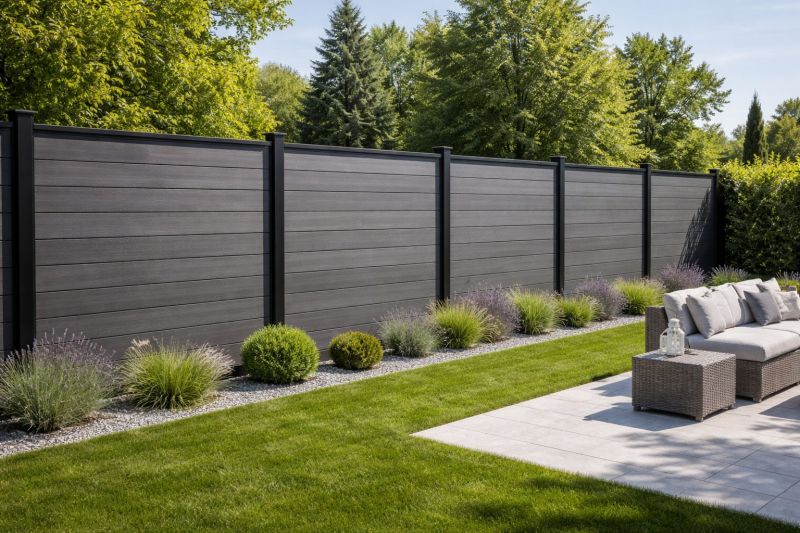
Part 1: Composite fence repair
Cracked or broken boards
Composite boards don't splinter like wood, but a hard impact — a vehicle, a falling limb — can crack them, and a cracked board can't be convincingly patched: fillers don't bond or flex like composite. The repair is replacement. In stacked-board systems, remove the top trim and slide the boards above the damaged one up or out, swap in the new board, and restack. In panel systems, the panel unclips or unscrews and a matching panel goes in. Either way you need the same brand, profile and color — composite colors are proprietary, so keep your product documentation.
Warped boards
Quality composite rarely warps, but boards installed without their expansion gaps can bow in heat, and stored-wrong or budget boards can arrive twisted. A bowed board that sprang from a missing expansion gap sometimes settles after being reinstalled with the manufacturer's gap (commonly about 1/4 inch at the ends, varying by brand). A genuinely warped board is a replacement, not a persuasion project — composite has a memory for its molded shape.
Fading and staining
Early-generation composites faded visibly; modern capped boards (with a polymer shell) fade far less and more evenly. What you can do: wash with soap, water and a soft brush — most surface grime, pollen and mildew comes off, and composite-safe cleaners handle the stubborn spots. What you can't do: stain it back. Composite isn't meant to be painted or stained (and doing so usually voids the warranty). Manage expectations: clean, even fading is aging, not damage.
Post problems
Composite fences stand on posts like every other fence — often wood or steel cores sleeved in composite, set in concrete. A leaning composite fence is a post footing problem with the same diagnosis and fix as any other: see the leaning fence guide. One composite-specific note: grooved posts locate the boards, so a shifted post shows up as boards binding or gaping unevenly at one end — check the post before blaming the boards.
Loose boards and gate issues
Boards that rattle usually need their spacer blocks or clips replaced, or a post that has moved a fraction — address the cause, then re-seat. Composite gates are heavy (composite boards weigh more than wood), so sagging gates are common on undersized frames: the durable fix is a metal gate frame kit with composite infill, not bigger screws into composite.
Composite fixes depend on an exact match
Brand, profile and color are proprietary. If your line is discontinued, a pro's supplier network may find old stock — here's the DIY vs. pro split.
Part 2: How to install a composite fence
Most residential composite fences use the stacked-board system described below; the general build guide covers permits, property lines, 811 and layout that come first.
-
Lay out and set the posts
Mark post positions at the board length your system uses (commonly 6 feet). Posts are typically steel or wood cores — or the system's own structural posts — set in concrete holes about 10–12 inches wide and deep enough to bury a third of the post, below the frost line where applicable. Plumb, brace, and let the concrete cure fully; stacked boards are heavy and will lean a green post.
-
Fit the post sleeves and bottom trim
Slide the composite post sleeves/caps system over the cores per the manufacturer's design, and fit the bottom rail or starter trim that the first board rests on. This trim sets the whole panel's height — get it level along the run, stepping it at grade changes rather than tilting boards.
-
Stack the boards
Slot boards into the grooves of facing posts one on top of another, usually tongue-and-groove, keeping the specified expansion gap at the ends — composite expands in heat, and a tight stack in winter becomes a bowed panel in August. Work both posts evenly so boards stay engaged in both grooves as you build height.
-
Cap it off
Fit the top trim board or rail across the panel, then the post caps. The caps matter beyond looks: they keep water out of hollow sleeves and cores.
-
Build and hang the gate
Use a metal-framed gate kit sized for composite infill (or the manufacturer's gate), hang it on the sturdiest post with heavy hinges, and set a self-closing latch where codes require one. Composite gates sag on wood frames — the metal frame is not an upsell; it's the repair you do in advance.
Composite fence questions, answered
Can you paint or stain a composite fence?
Manufacturers say no — composite (especially capped composite) doesn't absorb stain, paint adhesion is poor, and coating it typically voids the materials warranty. If the color has become a problem, thorough cleaning is the sanctioned fix; replacement boards are the real one.
Does composite fencing get hot in the sun?
Dark composite colors do get noticeably hot in direct sun — hotter than painted wood — which matters for fences you'll lean on or that enclose a play area. Lighter colors run cooler. It doesn't affect the fence's durability, just barefoot and bare-hand comfort.
How much does composite fence repair cost?
Individual replacement boards are a modest materials cost if your profile is still made; professional board or panel replacement is usually priced like-for-like with vinyl panel work, with the total depending on how many boards must be unstacked to reach the damaged one. Prices vary by brand and area — our cost guide has the repair ranges to measure quotes against.
Is composite worth it over wood?
It costs more up front and less over its life: no staining, no rot repairs, a lifespan roughly a decade longer than wood. If you plan to stay in the house, the math often favors composite; for a short-tenure fence, wood's lower build cost usually wins. Our fence types hub compares all six materials side by side.